
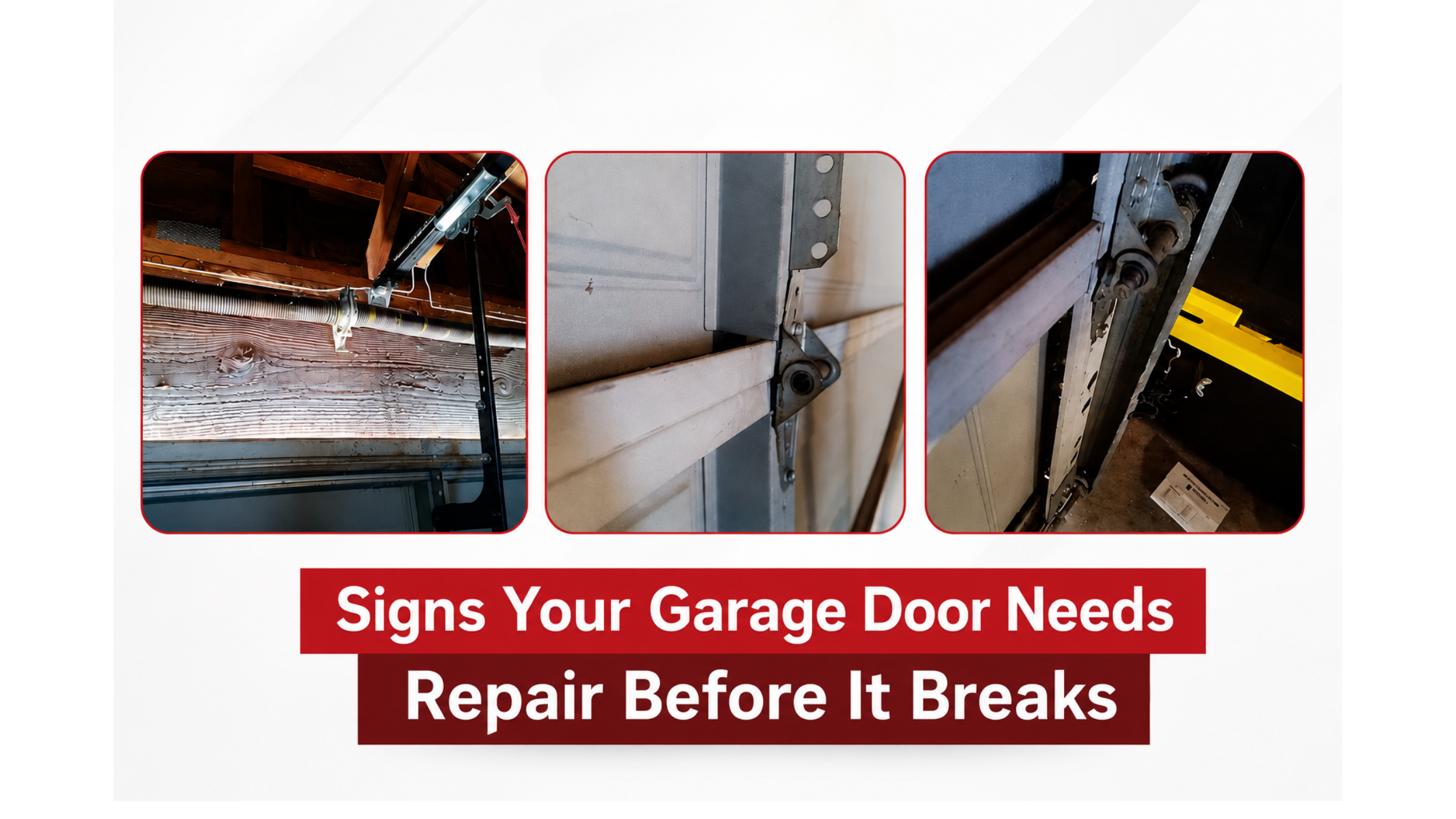
Your garage door is one of the hardest-working parts of your home. Most homeowners in Antioch, Brentwood, Oakley, Pittsburg, Concord, and surrounding Contra Costa County neighborhoods use their garage door multiple times every day — often without thinking about it.
The problem is that garage doors rarely fail without warning. In most cases, they give clear signs something isn’t right long before a complete breakdown happens.
Recognizing these early warning signs can help you avoid emergency repairs, prevent safety risks, and save money. Here’s how to tell when your garage door needs professional attention before it stops working altogether.
1. Your Garage Door Is Getting Noisy
Garage doors naturally make some sound, but sudden or increasing noise is often the first sign of trouble.
Watch for sounds like:
• Grinding or scraping
• Loud banging when opening or closing
• Squeaking or squealing
• Vibrating or rattling
These noises usually indicate worn rollers, loose hardware, or parts that need adjustment or lubrication. Ignoring them can lead to bigger mechanical issues over time.
If your garage door sounds noticeably louder than it used to, it’s a good idea to schedule an inspection.
2. The Door Moves Slower Than Normal
A healthy garage door should open smoothly within a few seconds. If yours suddenly feels sluggish or struggles to open, it may be dealing with:
• Aging springs
• Opener strain
• Track alignment problems
• Motor wear
Many homeowners assume this is normal aging, but slower movement often means the system is working harder than it should — which can eventually cause complete failure in your residential garage doors.
3. The Door Looks Uneven or Shaky
Stand back and watch your garage door as it opens and closes.
Does it:
• Shake while moving?
• Tilt to one side?
• Appear crooked?
• Hesitate halfway?
These are common signs of cable issues, track problems, or imbalance in the system. An uneven door places extra stress on every component, increasing the chance of sudden breakdowns.
4. Your Garage Door Feels Heavy
If you manually open your garage door and it feels unusually heavy, this may signal a serious issue.
Garage doors rely on springs to carry most of the weight. When springs wear out or weaken, the opener must do more work — and eventually, it may stop functioning entirely.
A heavy garage door is more than an inconvenience; it can become a safety hazard if left unrepaired.
5. The Door Reverses or Won’t Close Properly
Modern garage doors include safety features that stop the door from closing when something blocks its path. But if your door reverses for no clear reason, it could indicate:
• Sensor misalignment
• Electrical issues
• Track obstructions
• Opener problems
Many Contra Costa County homeowners first notice repair needs when their garage door refuses to close completely, especially at night or when leaving for work.
6. Increased Energy Bills or Drafts
Garage doors also affect home comfort.
If you notice:
• Hot air entering the garage
• Cold drafts during winter
• Rooms near the garage becoming uncomfortable
Your door’s seals or insulation may be worn out. Damaged weather stripping not only affects temperature but also allows dirt, pests, and moisture inside.
7. Visible Wear and Tear
Sometimes the signs are easy to see.
Check your garage door for:
• Frayed cables
• Rusted hardware
• Bent tracks
• Cracked panels
• Loose brackets or hinges
Even small visible issues should be addressed early. Minor repairs are far more affordable than replacing major components after a failure.
8. Frequent Need for Adjustments
Are you constantly resetting your opener or adjusting remotes?
Recurring small problems usually mean the system needs professional maintenance. Garage doors are complex systems where all parts must work together correctly.
Routine service helps prevent repeated inconvenience and unexpected breakdowns.
9. Your Garage Door Is Over 10–15 Years Old
Garage doors don’t last forever. Even well-maintained systems experience wear after years of daily use.
Older garage doors often develop:
• Spring fatigue
• Opener inefficiency
• Safety feature limitations
• Increased repair frequency
If your door is aging, a professional inspection can help determine whether repair or replacement is the smarter investment.
Why Early Repairs Matter
Waiting until a garage door completely stops working often leads to:
• Emergency service calls
• Higher repair costs
• Safety risks for family members
• Possible vehicle entrapment
Homeowners throughout Antioch, Oakley, Brentwood, Pittsburg, and Concord are increasingly choosing preventative repairs to keep their garage doors reliable year-round.
A simple tune-up today can prevent a major inconvenience tomorrow.
Simple Maintenance Tips for Homeowners
While professional service is important, homeowners can help extend garage door life by:
• Listening for new noises
• Keeping tracks clear of debris
• Testing safety sensors monthly
• Scheduling annual inspections
• Avoiding DIY spring or cable repairs
Garage door springs and cables are under extreme tension and should always be handled by trained technicians.
When to Call a Local Garage Door Professional
If you notice any of these warning signs, don’t wait for your garage door to fail completely.
A trained technician can:
• Inspect all moving parts
• Identify hidden wear
• Perform adjustments safely
• Recommend cost-effective repairs
Addressing issues early keeps your home secure and your daily routine running smoothly.
Need Garage Door Repair or Maintenance?
If your garage door is showing signs of wear, the team at AAAA Quality Garage Door is here to help homeowners throughout Contra Costa County.
Whether you need a quick repair, routine maintenance, or a full garage door replacement, experienced technicians can diagnose the issue and provide reliable solutions tailored to your home.
Don’t wait until your garage door breaks — catching problems early keeps your home safe, convenient, and stress-free.
FAQs
1. What are the most common signs that a garage door needs repair?
Some of the most common warning signs include unusual noises, slow operation,
shaking or uneven movement, difficulty closing properly, and visible wear
like frayed cables or bent tracks. Catching these problems early can help
prevent major garage door failures and costly repairs.
2. Is it dangerous to use a garage door with broken springs or cables?
Yes. Garage door springs and cables are under high tension and can become
serious safety hazards if damaged. Continuing to use the door may lead to
sudden failure, injury, or additional damage to the opener system.
Professional repair is strongly recommended.
3. Why is my garage door opening slower than normal?
A slow-moving garage door may be caused by worn springs, opener strain,
track alignment issues, or aging mechanical components. If your garage door
suddenly becomes sluggish, it’s a good idea to have it inspected before the
problem worsens.
4. How often should a garage door be professionally serviced?
Most homeowners should schedule garage door maintenance at least once a year.
Routine inspections and tune-ups help identify worn parts early, improve
safety, reduce unexpected breakdowns, and extend the life of the entire
garage door system.
5. Should I repair or replace my old garage door?
If your garage door is more than 10–15 years old and experiencing frequent
problems, replacement may be more cost-effective than repeated repairs.
A professional garage door technician can inspect the system and recommend
the best option based on the condition of the door, springs, opener, and
safety features.